Smart living gadgets make everyday life easier by automating repetitive household tasks, reducing mental effort, improving daily routines, and helping you save time. Whether it is scheduling appliances, tracking healthy habits, or sending helpful reminders, the right gadgets simplify everyday life without adding unnecessary complexity. The key is choosing smart gadgets that solve real everyday problems instead of buying technology simply because it is new.
Have you ever reached the end of the day feeling mentally tired, even though you spent most of your time at home or working at a desk? Small daily tasks like remembering to switch off appliances, tracking healthy habits, or managing household routines may seem insignificant on their own. However, when they happen repeatedly, they create unnecessary mental effort that gradually adds up.
This is where smart living gadgets can make a meaningful difference. Instead of replacing your daily routines, they simplify them by automating repetitive tasks and helping you stay organized. From smart plugs and fitness trackers to hydration reminders and sleep monitoring tools, the right gadgets can save time, reduce mental load, and support healthier habits.
In this guide, you’ll learn what smart living gadgets are, how they work, which devices are genuinely useful for beginners, common buying mistakes to avoid, and practical ways to use them to build a simpler and more efficient daily routine.
Why So Many People Feel Overwhelmed by Daily Home Tasks
The problem is rarely the big things. It is the accumulation of small ones.
For example:
• Turning appliances on and off repeatedly.
• Wondering whether the fan is still running in an empty room.
• Forgetting to drink water during a busy workday.
• Waking up late because the water heater was not scheduled.
None of these feel significant on their own. Together, they create a steady background noise of mental effort that drains energy before the day has properly begun.
Psychologists refer to this as cognitive load, the total amount of mental effort required to process information, make decisions, and complete tasks.
Smart living gadgets help reduce cognitive load by automating or simplifying repetitive tasks. They do not replace your judgment or decision-making. Instead, they handle routine activities in the background, allowing you to focus your attention on more important tasks.
Smart home technology has become more accessible in recent years as connected devices have become easier to use and more affordable for many households. Research suggests that factors such as perceived usefulness, ease of use, compatibility, and cost influence whether people choose to adopt smart home technology.
How Unmanaged Home Tasks Affect Daily Life
Most people do not realize how small daily household frustrations can affect their energy, focus, and overall mood.
When mornings involve searching for things, manually managing multiple appliances, and making a dozen small decisions before 9 AM, the workday starts from a depleted baseline. By midday, decision fatigue sets in earlier. By evening, the idea of cooking, exercising, or spending quality time with family feels genuinely difficult.
Smart living gadgets address this at the root level, not by adding technology for its own sake, but by reducing the friction that accumulates across dozens of daily moments.
Here is a simple comparison of how small daily tasks can change with the help of smart living gadgets:
| Without Smart Gadgets | With Smart Gadgets |
|---|---|
| Manual appliance management | Scheduled automation |
| Forgetting water intake | Hydration reminders |
| Irregular movement during desk work | Hourly stand reminders |
| Manually tracking sleep patterns | Passive sleep awareness |
| Uncertain energy usage | Visible consumption data |
| Reactive home management | Proactive and calm routines |
What Are Smart Living Gadgets and What Do They Actually Do?
Smart living gadgets are everyday devices that use technology to simplify routine tasks, improve convenience, and make daily life more efficient. Instead of requiring constant manual effort, these devices help automate repetitive activities, allowing you to spend less time managing household routines and more time focusing on what matters most.
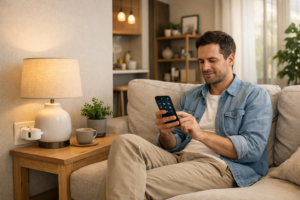
Rather than replacing your judgment or making decisions for you, smart living gadgets are designed to support your daily routine. They quietly handle specific tasks in the background, helping reduce mental effort while making everyday activities more organized and predictable.
Most smart living gadgets used in everyday homes fall into four main categories:
-
Home automation devices that schedule or control appliances automatically.
-
Health and wellness devices that monitor habits such as movement, sleep, or heart rate.
-
Comfort and energy management devices that automatically adjust lighting, temperature, or energy usage.
-
Reminder and routine devices that help you stay consistent with hydration, medication, appointments, or other daily habits.
One of the biggest advantages of modern smart living gadgets is that they are designed for beginners. Many devices connect to a mobile app and can usually be set up within a few minutes by following the manufacturer’s instructions, making smart home technology more accessible than ever before.
How Do Smart Living Gadgets Actually Work?
Smart living gadgets work by combining internet connectivity, sensors, and simple automation to perform routine tasks with minimal effort from you. While the technology behind these devices can be advanced, using them is usually straightforward and does not require any technical expertise.
Most smart living gadgets connect to your home’s Wi-Fi network and are managed through a mobile app. During setup, you can choose simple actions such as turning an appliance on at a specific time, receiving reminders to drink water or take medication, tracking your sleep, or adjusting lighting automatically. Once these settings are in place, the device follows them consistently without requiring daily input.
From the user’s perspective, the process is simple. You set up the device, customize it to match your routine, and let it work in the background. You only need to open the app occasionally to check information, make small adjustments, or review your progress. Over time, these small automations become a natural part of your daily routine, helping you save time, reduce repetitive tasks, and stay more organized.
Are Smart Living Gadgets Worth It for Beginners?
Smart living gadgets are genuinely worth considering for beginners when they are chosen to solve one specific, everyday problem rather than being purchased simply because they offer advanced features.
One of the most common mistakes beginners make is choosing a gadget based on its features instead of the problem it solves. For example, a smart bulb may sound impressive, but it may not provide much value if you rarely need automated lighting. On the other hand, a fitness tracker can be a practical investment if you spend long hours sitting and need regular reminders to move.
Before buying any smart gadget, ask yourself one simple question: What daily task consistently costs me time, energy, or mental effort? The answer will help you identify which device is most likely to improve your routine instead of adding unnecessary technology to your home.
For most beginners, starting with one well-chosen gadget is often more beneficial than buying several devices at once. As you become comfortable using it, you can gradually decide whether additional smart gadgets genuinely fit your lifestyle and daily needs.
What Types of Smart Living Gadgets Make the Biggest Difference at Home?
The smart living gadgets that make the biggest difference are not necessarily the most advanced or expensive. Instead, they are the ones that solve everyday problems and fit naturally into your daily routine. Here are some of the most practical options for beginners.
Smart Plugs With Scheduling
Smart plugs are one of the easiest and most useful smart home devices for beginners. They allow you to schedule when connected appliances turn on or off, making everyday routines more convenient. Water heaters, fans, coffee makers, phone chargers, and other compatible appliances can all be automated without replacing the appliance itself.
They are particularly useful for people who often forget to switch off appliances before leaving home. Many smart plugs also allow you to check and control connected devices remotely through a mobile app, providing additional convenience and peace of mind.
Fitness Trackers and Activity Monitors
For people who spend long hours sitting at a desk, fitness trackers can help build healthier daily habits. Features such as step counting, hourly movement reminders, heart rate monitoring, and sleep tracking provide useful insights into your daily activity levels.
However, the real value comes from using this information to make small lifestyle improvements rather than simply collecting data. If you want practical ideas for turning activity data into healthy routines, read our guide on Daily Habits for Better Health, Energy, and Longevity.
Smart Water Bottles and Hydration Reminders
Many people unintentionally drink less water during busy workdays. Smart water bottles and hydration reminder apps help you build a consistent hydration habit by sending reminders throughout the day. Although the technology is simple, maintaining proper hydration can support concentration, energy levels, and overall well-being.
Sleep Awareness Tools
Sleep tracking devices help you understand how your daily habits influence your sleep quality. They can identify patterns related to bedtime, sleep duration, and nighttime interruptions. While these tools do not diagnose sleep disorders, they can encourage healthier bedtime routines and help you recognize habits that may be affecting your sleep.
Smart Lighting and Air Management
Smart lighting systems allow you to automate lighting schedules and create a more comfortable home environment. Many users schedule lights to gradually dim in the evening, supporting a relaxing bedtime routine.
Air purifiers with smart features can also help improve indoor air quality by reducing dust, pollen, and other airborne particles. While they are not a replacement for proper ventilation or medical treatment, they can contribute to a cleaner and more comfortable indoor environment, especially for people living in urban areas.
Practical Smart Living Gadget Strategies That Actually Work
Strategy 1: Start With Your Biggest Daily Frustration
Before buying any smart gadget, identify the one daily task that consistently wastes your time, energy, or mental effort. Start by solving that single problem instead of trying to automate everything at once.
This approach works because a gadget that solves a real problem naturally becomes part of your routine. In contrast, gadgets purchased out of curiosity are often used for a short time before being forgotten.
Strategy 2: Give Every New Gadget Time to Become a Habit
Avoid judging a new gadget after only a few days. The first week is usually spent learning how to use it and adjusting the settings. Over the following weeks, it gradually becomes part of your daily routine.
Giving yourself at least four weeks provides a more realistic way to decide whether the gadget genuinely improves your daily life or simply adds unnecessary complexity.
Strategy 3: Treat Data as a Guide, Not a Judgment
Information from fitness trackers, sleep monitors, and other smart devices should be viewed as feedback rather than a final conclusion. If your daily step count is low or your sleep quality declines, use that information to identify possible causes and make one small improvement at a time.
Over time, this approach turns data into a practical tool for building healthier habits instead of creating unnecessary pressure.
Strategy 4: Build Systems Instead of Relying on Motivation
Motivation changes from day to day, but simple systems remain consistent. Scheduled reminders, automated routines, and smart notifications reduce the need to remember every task manually, making healthy habits easier to maintain even during busy days.
Strategy 5: Review Your Smart Gadgets Regularly
Set aside a few minutes each month to evaluate whether your smart gadgets are still providing value. Ask yourself whether they save time, simplify your routine, or encourage better habits. If a device no longer serves a useful purpose, consider adjusting how you use it or replacing it with a solution that better matches your current needs.
Strategy 6: Master One Gadget Before Adding Another
It can be tempting to buy several smart gadgets at once, but this often creates unnecessary complexity. Learn to use one device confidently before introducing another. Building one successful habit at a time makes it easier to enjoy the long-term benefits of smart living without feeling overwhelmed.
Who Benefits Most From Smart Living Gadgets?
Desk-based professionals who spend most of the day sitting benefit most immediately from fitness trackers and movement reminders. Long sedentary periods are associated with meaningful health risks, and a device that interrupts sitting every hour costs nothing to operate and addresses the problem directly.
Working parents managing household and professional responsibilities simultaneously benefit most from automation tools like smart plugs and scheduling. When home systems run predictably in the background, the mental load of managing them decreases, which frees energy for parenting, work, and personal recovery.
Older adults living independently benefit from simple reminder systems for hydration and medication, basic health monitoring tools like blood pressure monitors, and safety-oriented gadgets that provide family members with passive awareness without constant check-ins.
People building new wellness habits benefit from the gentle accountability that wearable trackers provide. Seeing concrete daily data is often more motivating than abstract goals, and the data makes it easier to identify specifically what is and is not working in a new routine. For a broader overview of how gadgets support wellness routines, our guide on smart and health gadgets for beginners covers each category in practical detail.
Things to Know Before Buying Your First Smart Living Gadget
Before purchasing your first smart living gadget, keep these practical points in mind to avoid common mistakes and make a more informed decision.
Check Compatibility First
Most smart living gadgets require a smartphone and a stable Wi-Fi connection. Before buying, make sure the device is compatible with your phone’s operating system and supports your home network. Taking a few minutes to check compatibility can help you avoid setup problems later.
Expect a Short Setup Process
Most devices require some initial setup, including connecting to Wi-Fi, installing the manufacturer’s app, and adjusting a few settings. Although this usually takes only a short time, it is a one-time process. Once configured, most gadgets require very little daily effort.
Keep Your Device Updated
Manufacturers regularly release firmware and app updates to improve performance, add new features, and fix security issues. Keeping both the device and its companion app updated helps ensure reliable performance over time.
Consider Privacy and Security
Many smart living gadgets collect usage data to provide their features. Before using a device, review its privacy settings, use a strong password for your account, enable two-factor authentication if available, and download apps only from the official app stores. These simple steps can help improve the security of your personal information.
Start With a Practical Budget
For most beginners, a reliable mid-range device from a well-known manufacturer is often a better choice than the most expensive model. Focus on choosing a gadget that solves a real everyday problem rather than paying extra for features you may never use. As your needs grow, you can always upgrade later.
Common Mistakes Beginners Make With Smart Living Gadgets
Choosing the right smart gadget is only part of the process. Avoiding these common mistakes can help you get the most value from your investment.
Buying Too Many Gadgets at Once
Many beginners purchase several smart gadgets at the same time because the technology seems exciting. However, every new device requires setup, learning, and integration into your daily routine. Starting with one gadget and using it consistently before adding another usually leads to better long-term results.
Expecting Immediate Results
Smart living gadgets are designed to support habits, not create instant lifestyle changes. During the first few weeks, you are learning how to use the device and adjusting it to your routine. The real benefits often become noticeable only after consistent use over time.
Ignoring the Information Your Gadget Provides
A fitness tracker, sleep monitor, or smart plug is only useful if you regularly review the information it provides. Use the data to identify patterns, make small improvements, and track your progress. The value comes from the actions you take, not simply from collecting data.
Buying Features Instead of Solutions
It is easy to be impressed by long feature lists and advanced specifications. However, the best smart gadget is not necessarily the one with the most features. It is the one that solves a real problem in your daily routine and makes life noticeably easier.
Forgetting Basic Maintenance
Wearable devices and other smart gadgets need occasional care to perform reliably. Cleaning sensors, charging devices regularly, and installing firmware updates can help maintain accuracy, improve performance, and extend the lifespan of your device.
Quick Wins You Can Start Today
You do not need to transform your entire home in one day. Small, practical changes often have the biggest long-term impact. Start with these simple actions today.
Identify One Daily Problem
Take a few minutes to think about the one daily task that consistently wastes your time, energy, or mental effort. Write it down in a single sentence. Starting with one clearly defined problem makes it much easier to choose a smart gadget that provides real value instead of buying a device simply because it is popular.
Explore the Features You Already Have
Before purchasing a new smart gadget, check the health and productivity features already available on your smartphone. Many modern phones include built-in step tracking, sleep reminders, hydration notifications, and screen time reports. Spending a few minutes exploring these features may help you build better habits without buying any additional device.
Start Small and Build Gradually
Once you identify a genuine need, begin with a single smart gadget that solves that specific problem. Use it consistently for a few weeks before deciding whether you need additional devices. Building one successful habit at a time is often the simplest and most effective way to enjoy the benefits of smart living.
Frequently Asked Questions About Smart Living Gadgets
What are smart living gadgets?
Smart living gadgets are connected devices that automate or simplify routine home and lifestyle tasks. They range from smart plugs that schedule appliances to fitness trackers that monitor daily movement. Their purpose is to reduce friction in daily routines, not to add complexity.
Do smart living gadgets require technical knowledge to use?
Most smart living gadgets are designed for beginners and include step-by-step setup instructions. Many devices can be set up in a short amount of time by following the manufacturer’s guide.
Are smart living gadgets worth the cost for everyday households?
They are worth the cost when chosen to solve a specific, genuine daily problem. A gadget that addresses a real friction point in your routine can save time, reduce mental effort, and provide better value over time than a device you rarely use.
How many gadgets do I need to start?
One is enough. Choose a device that solves one specific daily problem, use it consistently for four weeks, and evaluate honestly whether it is adding value before adding anything else.
Can smart gadgets reduce daily stress?
Smart gadgets may help reduce everyday stress by automating repetitive tasks and reducing the number of routine decisions you need to make each day. However, they work best when combined with healthy daily habits and good time management.
How long before I notice genuine benefits from a smart gadget?
The time varies depending on the device and how consistently it is used. Many people begin noticing practical benefits after several weeks of regular use as the gadget becomes part of their daily routine.
Are smart living gadgets safe for children and older adults?
Yes, when chosen appropriately. Look for devices with simple interfaces and clear functions. For older adults, gadgets that support reminders and safety without requiring complex app navigation tend to work best. Parental controls and privacy settings should be reviewed for any gadget used by children.
What if my smart gadget does not work as expected?
Start with the basics: check Wi-Fi connectivity, app permissions, battery level, and whether the app has a pending update. Most common issues resolve through these steps. If the gadget consistently requires more attention than it saves, a simpler device may be a better fit for your lifestyle.
Do smart living gadgets help with time management?
Yes, indirectly. By automating routine tasks and providing reminders for consistent habits, they reduce the time spent on background decisions and repetitive management. The cumulative time saved across a week is often more significant than it appears day by day.
Can smart gadgets help with energy awareness at home?
Smart plugs with energy monitoring can help you understand how much electricity connected devices use, making it easier to identify usage patterns and improve energy awareness.
Is it safe to have smart gadgets connected to home Wi-Fi?
Consumer smart gadgets are generally safe when used with secure home networks, strong account passwords, and official manufacturer apps. Reviewing app permissions, using strong passwords, and keeping device firmware updated can help improve your security and privacy.
What is the difference between a smart gadget and a regular appliance?
A regular appliance performs its function when manually operated. A smart gadget connects to a network and can be scheduled, controlled remotely, or programmed to respond to specific conditions automatically. The smart element adds automation and awareness, not a different core function.
Conclusion
Smart living gadgets are most valuable when they solve real everyday problems rather than adding unnecessary technology. Small automations, such as scheduled appliances, movement reminders, and habit tracking, can gradually make daily routines more organized and less mentally demanding.
The best approach is to begin with one simple problem, choose one practical solution, and use it consistently for several weeks. As helpful habits develop, you can decide whether adding more smart gadgets genuinely supports your lifestyle.
Smart living is not about filling your home with technology. It is about using the right technology to simplify everyday life in practical and meaningful ways.
Disclaimer
This article is for informational and educational purposes only. It does not provide medical, technical, or professional advice. Please consult a qualified professional for personalized guidance.
References
- Sweller, J. (1988). Cognitive Load During Problem Solving: Effects on Learning.
DOI: https://doi.org/10.1207/s15516709cog1202_4 - Marikyan, D., Papagiannidis, S., & Alamanos, E. (2019). A Systematic Review of the Smart Home Literature: A User Perspective.
DOI: https://doi.org/10.1016/j.techfore.2018.08.015 - World Health Organization – Physical Activity
https://www.who.int/news-room/fact-sheets/detail/physical-activity - CDC – Sleep and Sleep Disorders
https://www.cdc.gov/sleep/ - CDC – Water and Healthier Drinks
https://www.cdc.gov/healthy-weight-growth/water-healthy-drinks/ - U.S. EPA – Guide to Air Cleaners in the Home
https://www.epa.gov/indoor-air-quality-iaq/guide-air-cleaners-home